
How we work
Plaster cracks, fixed for good.
In an earlier post, we talked about why Montreal walls crack. This time we’re showing you how we actually fix them in homes across Montreal and the West Island. The short version: there’s no one-size-fits-all patch. Every crack gets looked at first, and the repair is matched to what’s going on in that wall.
Step one: assess before you touch it
Before any repair, we look at where the crack is, what pattern it follows, and whether it’s simply the building moving over time. A seasonal hairline crack is one thing. A crack that keeps widening or shows staining points to moisture or movement, and that has to be dealt with first. Otherwise the repair won’t last.
Repairing old-style plaster (lath and plaster)
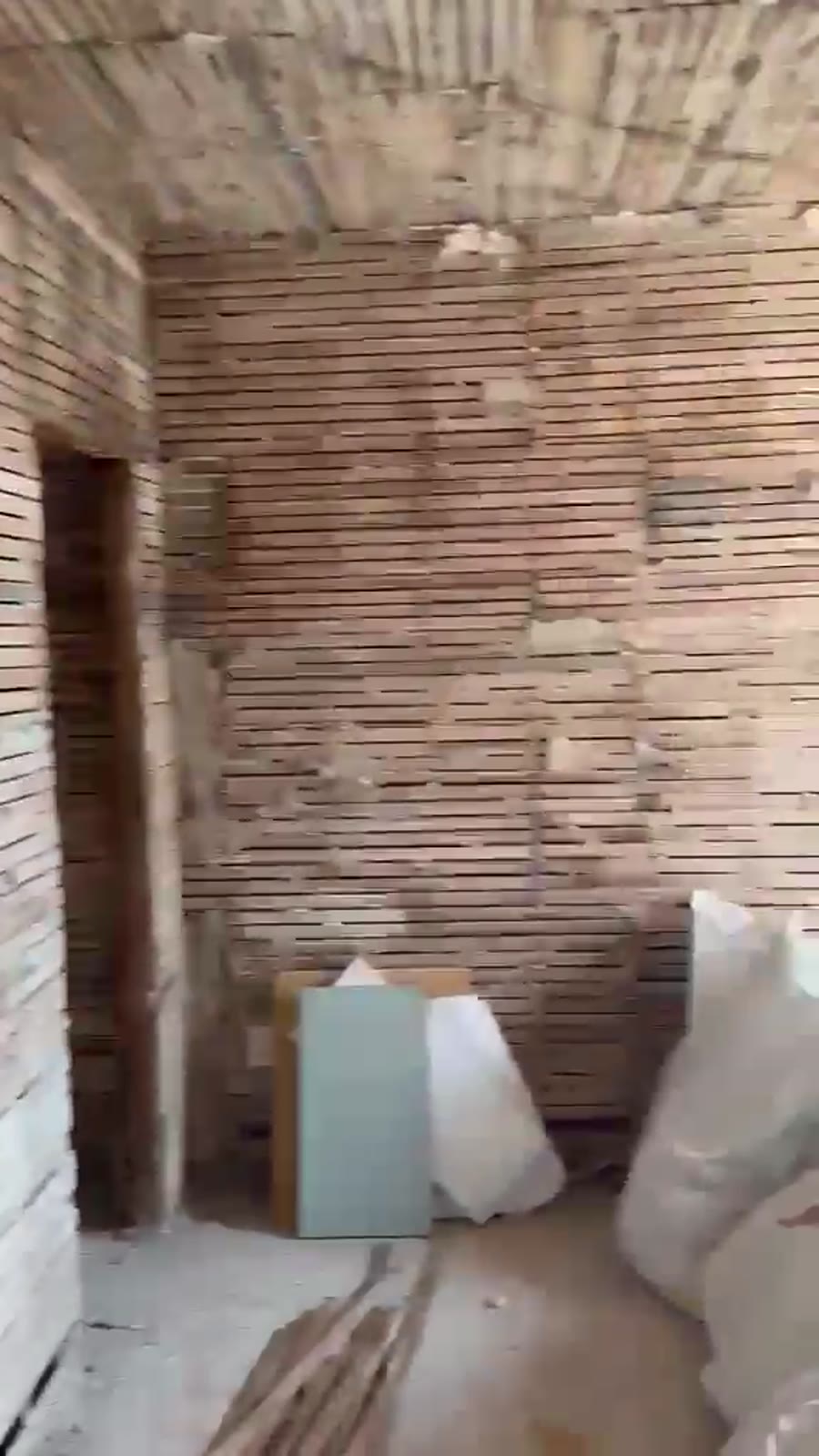
Many older Montreal homes have plaster applied over wood lath, thin wood strips nailed to the framing. When those walls crack from age and movement, here’s how we repair them:
- Cut out the crack. We open it up and remove the loose, weak material so the new material has something solid to grab onto.
- Pre-fill. The opening is filled with a setting-type compound.
- Reinforce with FibaFuse. We embed FibaFuse, a fiberglass reinforcing tape that comes in a roll, cut to length. Sometimes it takes a couple of layers.
- Fill and pull the joint. We fill over the tape and pull the joint flat with Durabond.
Why we use Durabond
Durabond is a setting-type joint compound. It comes as a dry powder that we mix with water, and it hardens by chemical reaction rather than by simply drying out. Once set, it’s hard, almost like cement, with very little shrinkage. That strength is what holds a repair together through Montreal’s seasonal movement and the dry air of the heating season.
We always mix it by hand. Mixing with a drill can speed up the set, so it starts hardening before it’s properly worked.
Choosing the right set time: 20, 45 or 90
Durabond comes in 20-, 45- and 90-minute set times. Which one we use depends on the job and how we’re working:
- 20 minutes: outside corners and corner beads, and small fills where we can work quickly.
- 45 minutes: butt joints. (We’ll use 20 here too when the job allows us to work fast.)
- 90 minutes: inside corners and larger fills. The longer working time keeps it workable, so we can shape it clean before it sets.
The same approach on modern drywall
New drywall (gypsum board) gets the same thinking. We use FibaFuse on the butt joints and paper tape on the inside corners. The first and second coats are Durabond, because that hard base is what resists cracking along the seams.
Because Durabond is so hard, it’s also hard to sand. That’s why the final coat is regular all-purpose joint compound. It’s softer, almost like dough, which makes it easier to sand, smooth out and feather into the wall for an invisible finish.
Why this matters
A hard base underneath and a smooth, workable finish on top: that’s what gives you a wall that looks good on day one and still looks good after the heating season.
Filler and a coat of paint might look fine for a month, but the crack usually comes right back.
Need a crack looked at?
Request a quoteOld plaster or new drywall, we’ll assess it and repair it the right way. See our framing, drywall, plaster & painting services. Call 438-866-2436 · RBQ 5883-8525-01